
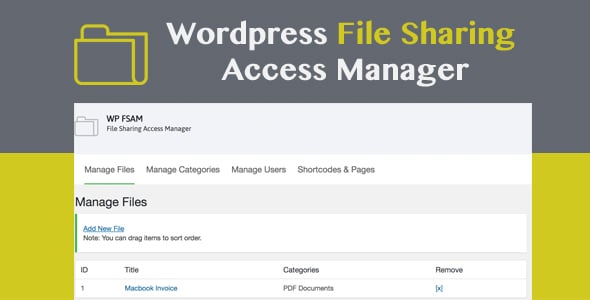
WP FSAM - File Sharing Access Manager — is a comprehensive solution for any WordPress site owner who needs to manage and protect their digital files. Whether you're sharing client documents, premium digital products, or internal company resources, this plugin provides a robust framework to ensure only authorized users get access. It integrates seamlessly into your WordPress environment, allowing you to manage files directly from the media library or a dedicated management panel without any hassle.
The core strength of WP FSAM lies in its granular control. You are no longer limited to simply making a file public or private. Instead, you can create complex rules based on user roles, individual user accounts, or even membership levels if you're using a membership plugin. This makes it an essential tool for businesses selling digital goods, educational platforms with course materials, or any organization that needs to maintain the confidentiality and integrity of its shared files. With detailed logs and analytics, you can monitor every download, track user activity, and gain valuable insights into how your files are being used.
Why This Is Important
In the digital age, your files are valuable assets. Uncontrolled access can lead to lost revenue, intellectual property theft, or compliance breaches. According to a recent study, businesses lose an average of 4% of their annual revenue due to unauthorized file sharing and document-related issues. For a small business, this could mean thousands of dollars lost each year. Furthermore, 65% of customers state they would lose trust in a company after a single data breach, which often starts with a simple, unsecured file.
WP FSAM directly addresses these pain points. By implementing secure access controls, you're not just protecting a file; you're safeguarding your revenue, protecting your brand's reputation, and building trust with your audience. It transforms a standard WordPress site into a secure digital delivery platform, giving you peace of mind and complete control over your most important digital assets.
Features
- User Role & User-Based Restrictions: Limit file access to specific user roles (e.g., Subscribers, Customers) or individual users.
- Secure & Encrypted Download Links: Generates protected, non-guessable links to prevent hotlinking and unauthorized sharing.
- Download Expiration: Set links to expire after a certain number of days or a specific date.
- Download Limit Control: Restrict how many times a single user or a specific link can be used for downloads.
- Frontend Access Management: Allow users to access their permitted files through a simple shortcode on any page.
- Comprehensive Download Logging: Track every download attempt, including user IP, timestamp, and which file was accessed. *
- File Access Analytics: Visualize download statistics with charts and reports to understand file popularity and user engagement.
- Bulk Protection Settings: Apply access rules to multiple files or entire media library folders at once to save time.
- Integration with Media Library: Manage file permissions directly from the native WordPress Media Library interface.
- Customizable Access Denied Messages: Define what unauthorized users see when they try to access a protected file.
Benefit Comparison
| Feature | Without WP FSAM | With WP FSAM |
|---|---|---|
| File Security | Files are public or private, no middle ground. | Granular control by user role, individual user, and IP. |
| Revenue Protection | High risk of unauthorized sharing of premium products. | Secure links prevent illegal distribution, protecting sales. |
| Link Expiration | Manual link removal required. Inefficient and prone to error. | Automated expiration by date or download count. |
| User Experience | Users may struggle to find their purchased files. | Centralized 'My Files' area via a simple shortcode. |
| Monitoring & Analytics | No visibility on who downloads files or when. | Detailed logs and analytics on every download attempt. |
| Time Investment | Manually managing access is time-consuming. | Bulk actions and clear rules save hours of admin work. |
How to install the plugin?
- Download the plugin archive using the button above.
- Navigate to Plugins > Add New in your WordPress dashboard.
- Click "Upload Plugin" at the top and select the downloaded ZIP file.
- Install, activate the plugin, and follow the quick setup wizard instructions.
FAQ
Can I restrict access to files for non-logged-in users?
Absolutely. One of the core features of WP FSAM is the ability to require users to be logged in to access specific files. You can set a general rule for a file that only 'logged-in users' can access it, or you can go further and specify that only users with a certain role (like 'Subscriber' or 'Customer') can download it. This is perfect for membership sites or for protecting lead magnets.
Does this plugin work with files stored on external services like Amazon S3 or Google Drive?
WP FSAM is primarily designed to protect files hosted within your WordPress Media Library on your own server. While it doesn't offer native integration to manage permissions for files on external cloud storage, you can use it to protect the WordPress page or post that contains the links to those external files. For direct protection, the files should be uploaded to WordPress.
How does the download link expiration feature work?
The plugin offers two types of expiration for secure download links. You can set a time-based expiration (e.g., the link is valid for 48 hours) or a usage-based limit (e.g., the link can only be used 3 times). Once the limit is reached, the link will become invalid, preventing further downloads and protecting your content from being shared indefinitely.
Will installing WP FSAM slow down my website?
WP FSAM is built with performance in mind. The plugin's code is optimized to run efficiently and only executes its permission checks when a protected file is being accessed. For general site visitors browsing pages without protected files, the impact is negligible. The download tracking and logging are also handled asynchronously to ensure a smooth user experience and minimal server load.
